Inside the Crow's Nest
Context
Trailer
Team
Art
- Carla Bernad
- Marcel Sanchez
- Ines Jackson
- Alex Iserte
- Juan Pablo Suñer
- Celia Ana Heck
Programming
- Carlos Mazcuñan
- Rodrigo Mico
- Lucas Calatayud
- Enrique Balbastre
- Daniel de Castro
- Vicente Molina
Design
- Gisela Garcia
- Nicolas Sanchez
- Juan Andres Mayorca
Inside the Crow's Nest is fixed camera survival horror game inspired by classics like Resident Evil and Silent Hill. In this game, you play as "The Hunter" who during a hunting trip gets kidnapped by cultists and now must try to escape the cult-infested monastery to avoid being sacrificed by the mutated cultists to restore the power of their eldritch god.
Inside the Crow's Nest has received a Mostly positive score on Steam and has over 45000 downloads and has gotten various nominations as of today, including "Best Student Game" at Bilbao International Games Conference and "Best Animation in an Ibero-American Game" at the Quirino Awards.
My responsibilities and contributions to the project were:
- System Design: Designing Core Gameplay Systems like the Camera, Interaction, Inventory/Diary and Magic Fog Systems, working with the programming team to properly implement them by testing and iterating.
- Level Design: Designing the Dungeons, which is the first level of the game.
- UI Design: Took ownership of the Inventory and Notes UI design, working together with artists and implementing changes with blueprints.
- Audio Direction: Spearheaded communication with musicians from Berklee College of Music, to ensure the audio helps with Player Immersion.
Detailed Breakdown
Camera System
We were tasked with making a Fixed-Camera Game, so the challenge we had to face is how to bring the Cinematic Feel of the Classic Horror Games while also trying to give them a modern twist.
My main reference for the Camera system Functionality was the Post-Trauma Demo and for the implementation, I worked alongside Vicente Molina to create a modular and designer-friendly tool.
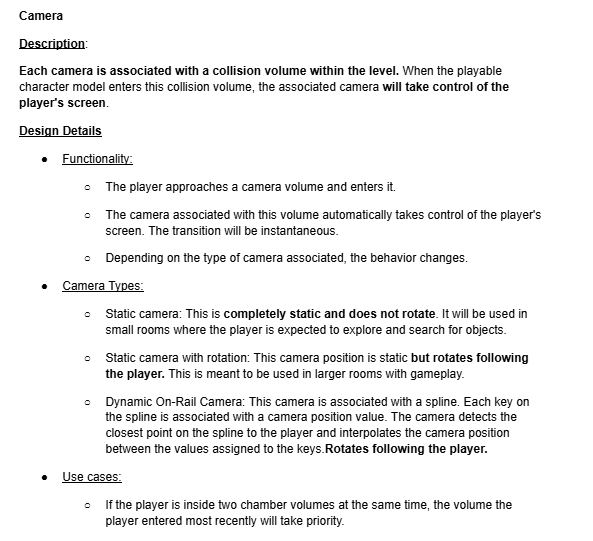
Camera Design Documentation
Early Camera Prototype tests
Interaction System
For the interaction System I worked alongside Programmers Lucas Calatayud and Carlos Mazcuñan.
For Inside the Crow's Nest we needed an interaction system that was modular and contextual in order to be able to handle the variety of behaviours from the interactable components.
Interaction Detection in Game
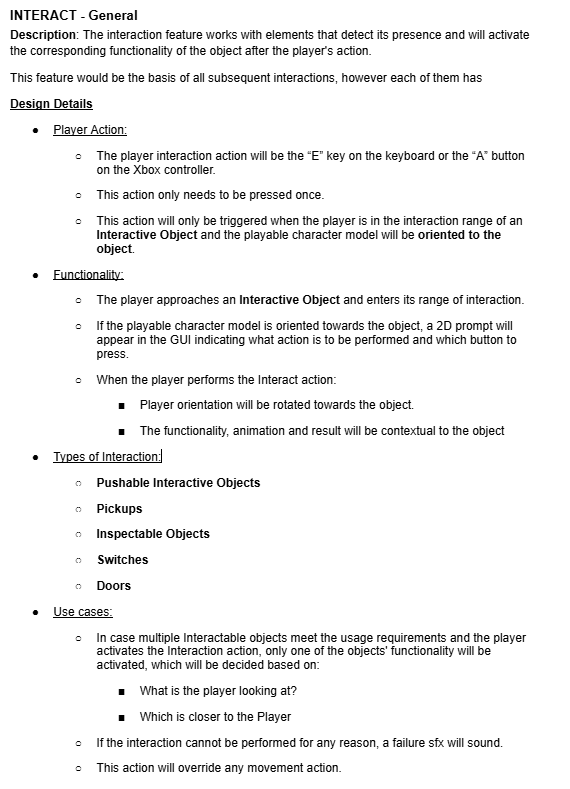
Interact Design Documentation
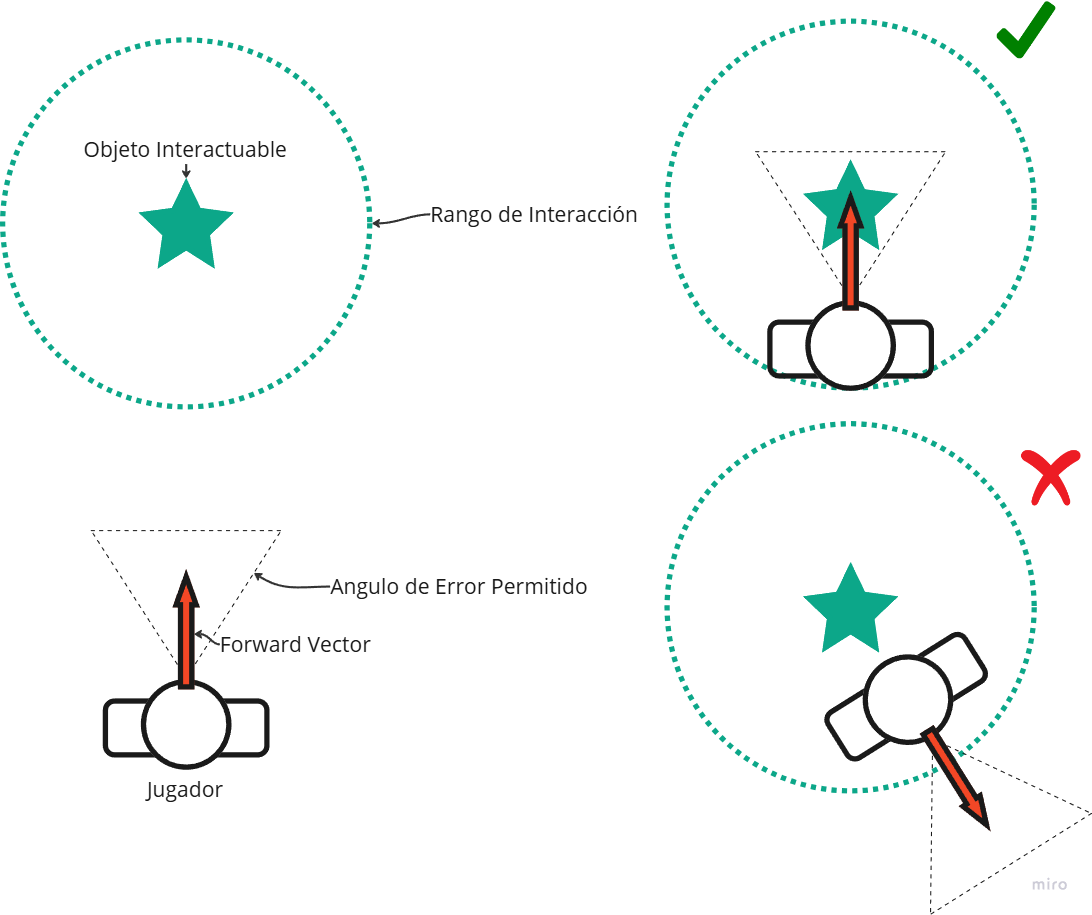
Interaction Functionality Diagram
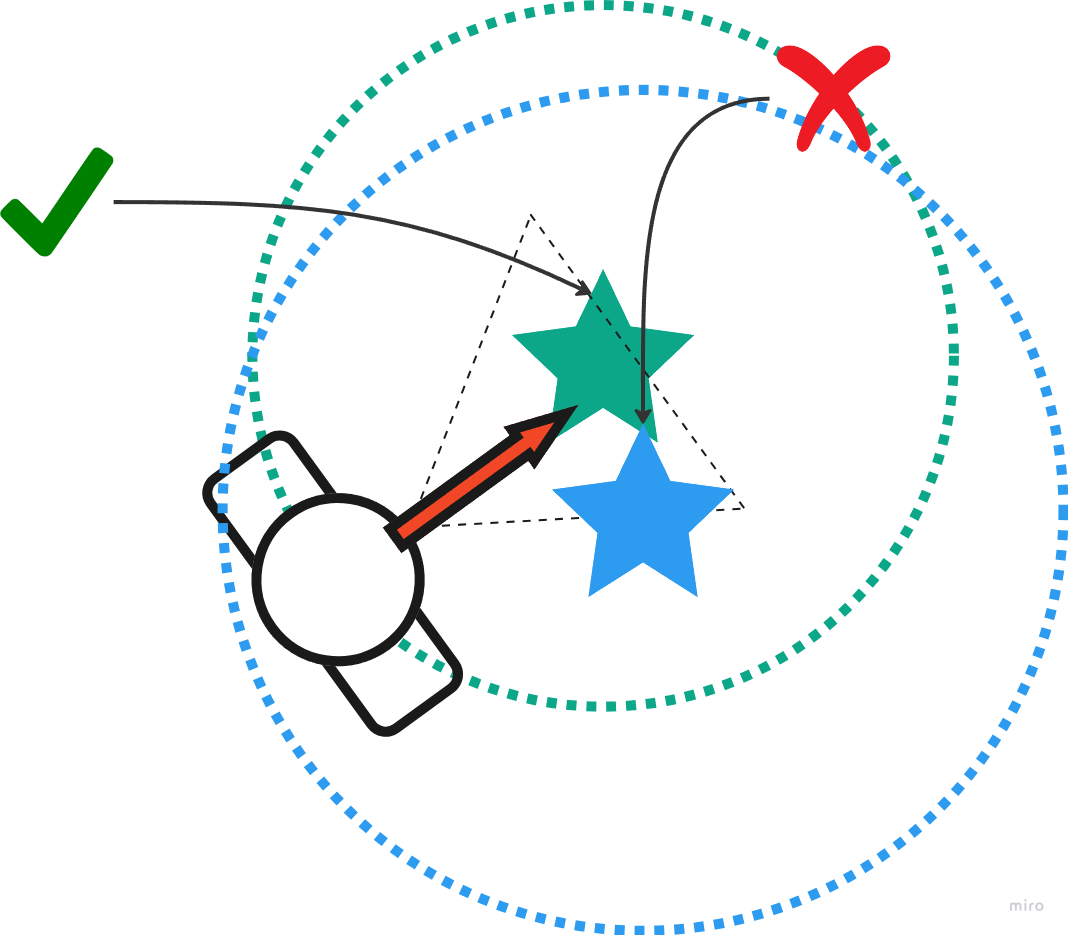
Interaction Use Cases/Error Handling
Inventory and Diary System
For this Feature I worked with Enrique Balbastre and Lucas Calatayud.
Initially I designed the Inventory system to be simple, and while it was always thought to have a limited capacity the design of this feature evolved over time to handle problems that appeared.
Problem #1: Inventory Filling too fast due to the Lore Notes and Clues taking up space.
Solution: Adding the Diary Tab that stores unlimited Lore Notes and Puzzle Clues.
Reasoning: It was Important for us that the player stored these notes, because it was one of the main methods we used to expose the player to the narrative of the game. It is not a solution uncommon to the genre and it fitted our use case.
Problem #2: We needed somewhere to show the Player HP, but we didn't want to show it in an HUD and risk player immersion.
Solution: We added it to the inventory.
Reasoning: Immersion was important for us due the fact that is something critical for the genre and we designed other elements like audio to foster it. When exploring solutions to this problem we originally thought to only have the picture of the player to change depending on the amount of health he had, but we to decided to add an HP bar for added clarity.
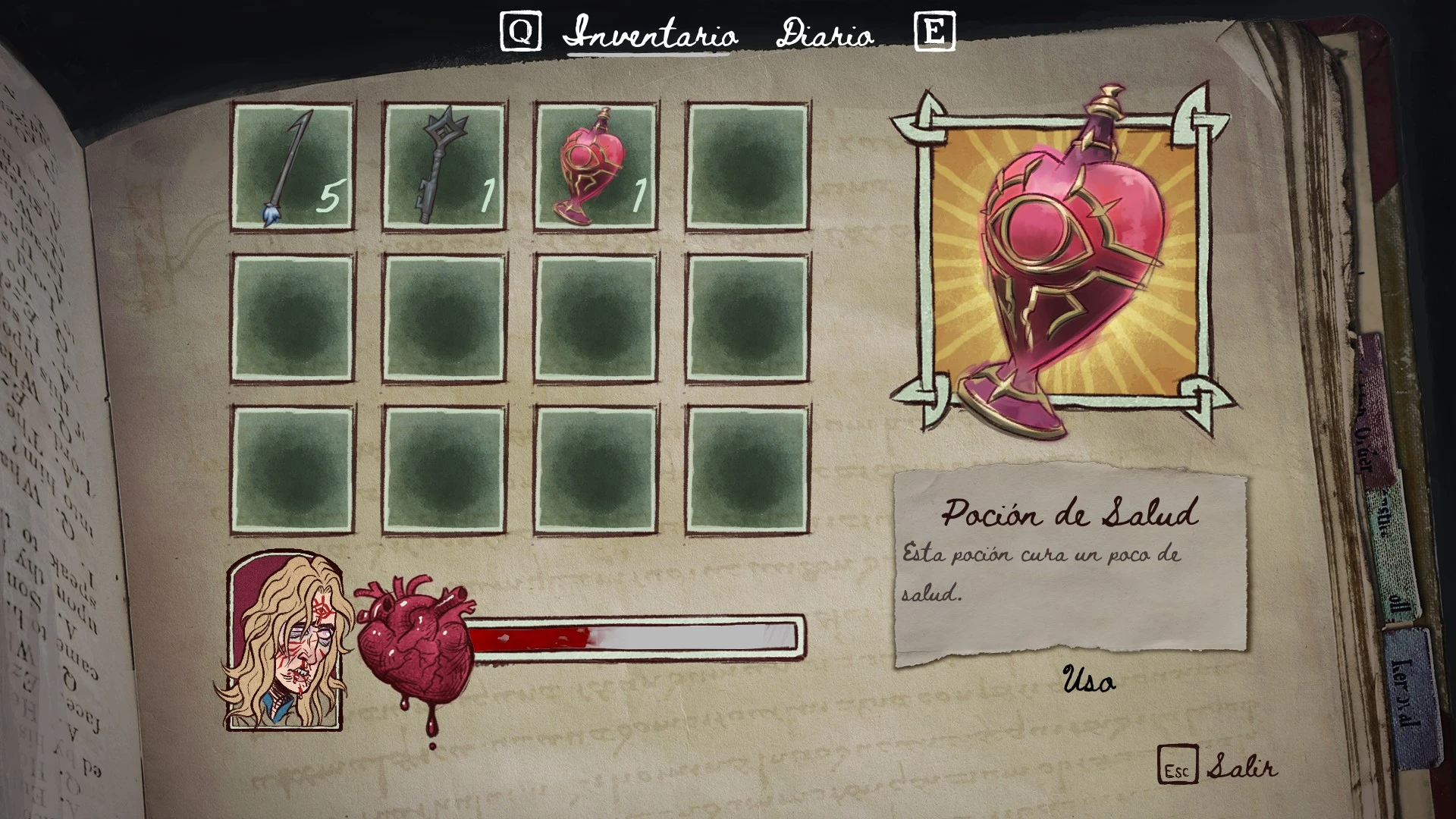
Final Inventory Tab
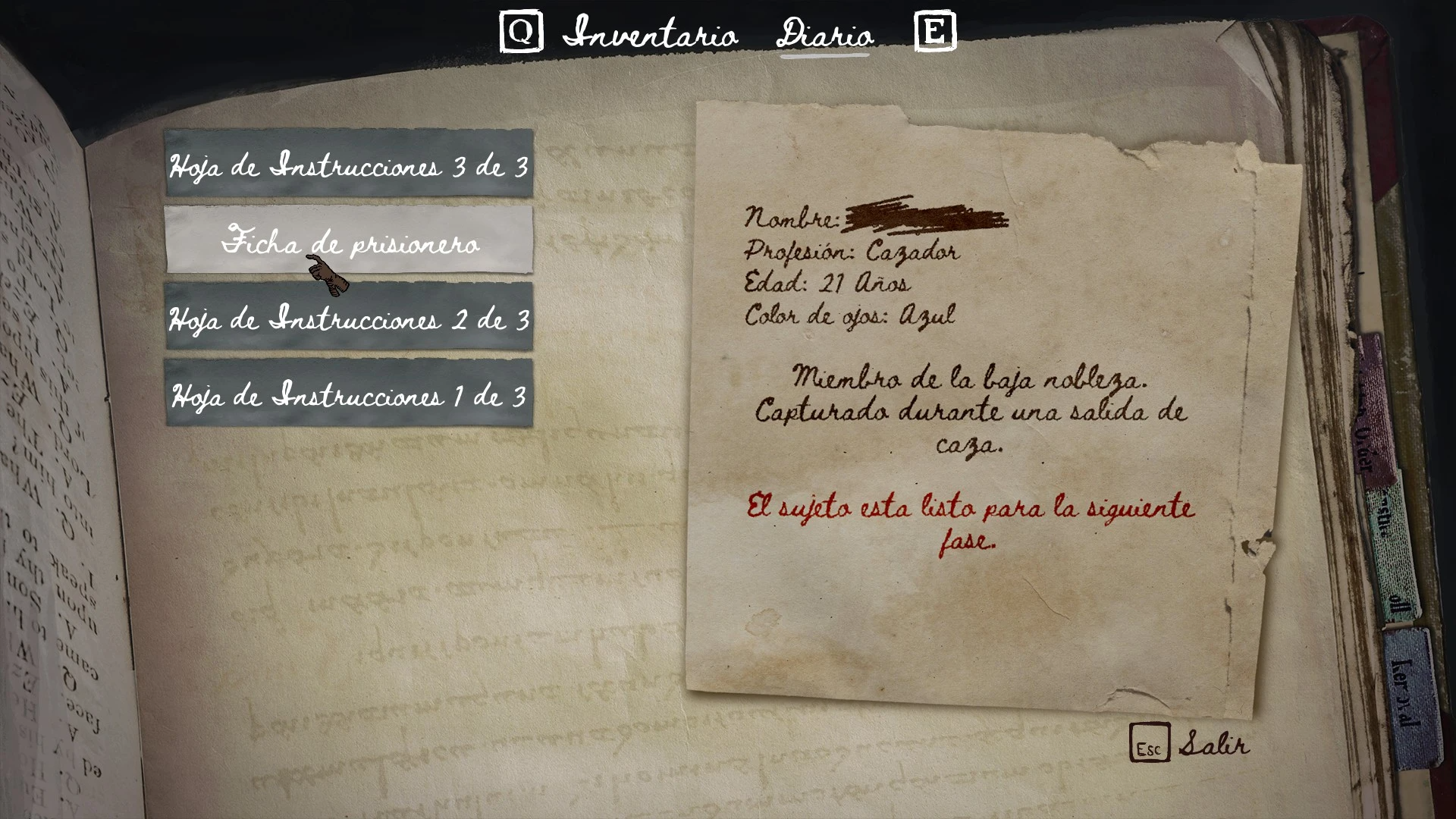
Final Diary Tab
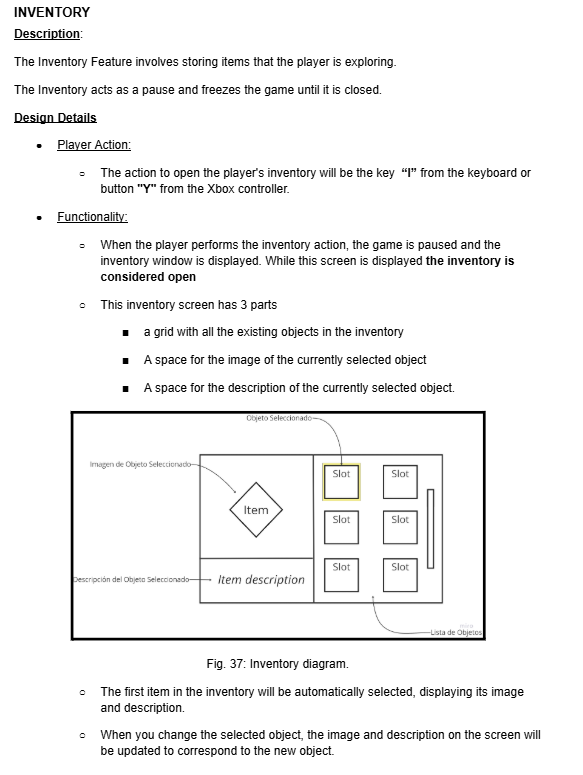
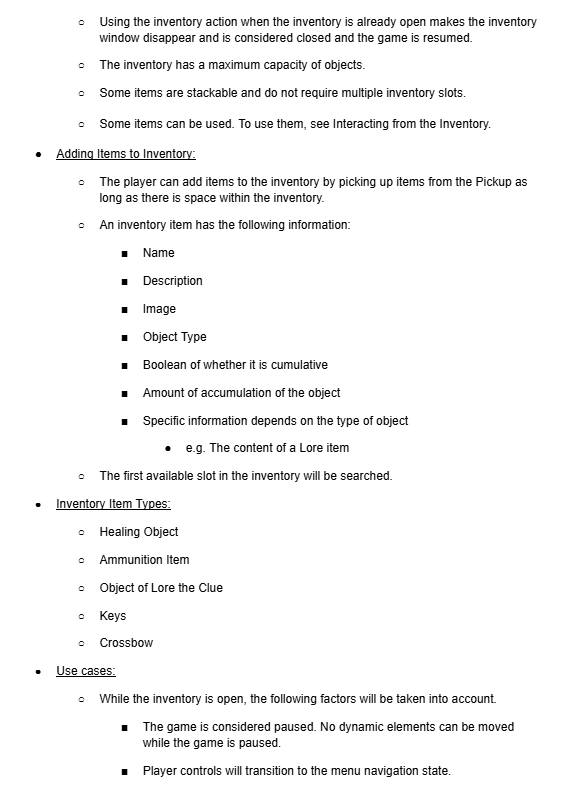
Inventory Documentation
Magic Lamp/Magic Fog System
The Magic Lamp and Magic Fog system is a mechanic inspired by Tormented Souls darkness mechanic where if you stand in the darkness for too long without a light source, the player dies.
We originally wanted to have a flashlight mechanic where the player could swap out of the crossbow and use it to explore dark areas to find clues and force the player to escape from enemies but this didn't get greenlit by the producers. Because of this we decided to use Fog instead since it does the thing we originally were looking for which was to hide items in for the player to explore. The lamp came naturally because it works using the pushing mechanics already implemented in the Game. This provided a Lock and Key relationship between the two elements and for the player to relate when there is Fog, you should find the Lamp.
During testing we found out that players were trying to interact with the items without using the lamp and not understanding the relationship. To prevent this behavior I decided block the ability of the player to interact while inside the fog, this added to the fact that the fog will kill you if you stay for too long fixed this issue.
Level Design
Final Level Playthrough
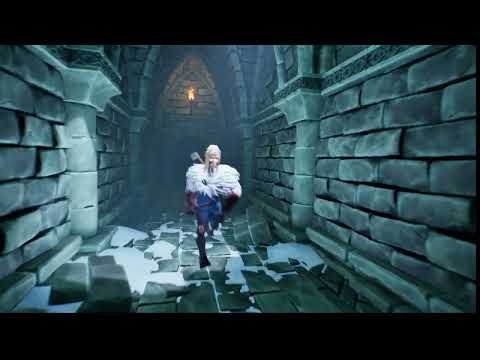
Dungeon Art made by Marcel Sanchez Moreno
Layouts
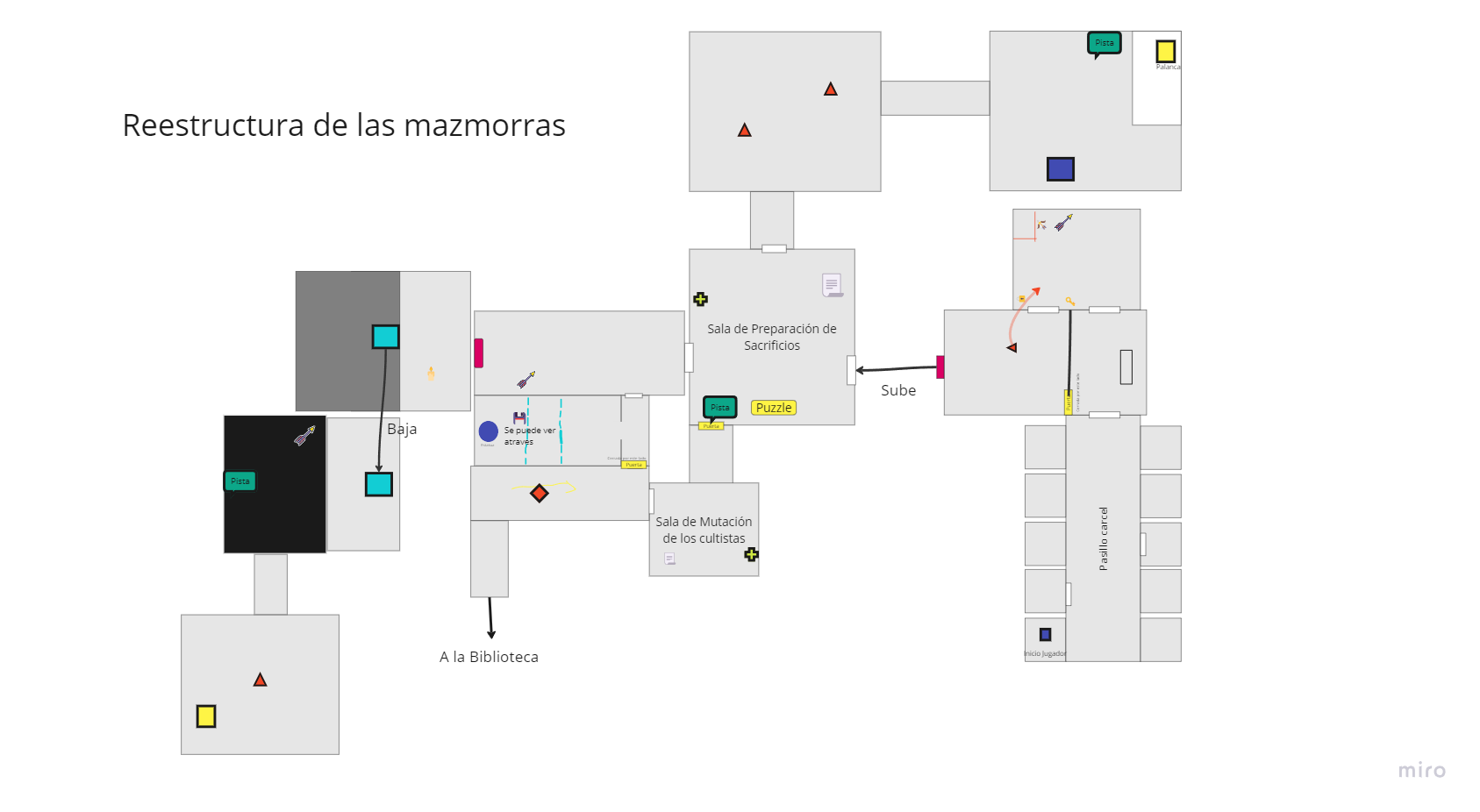
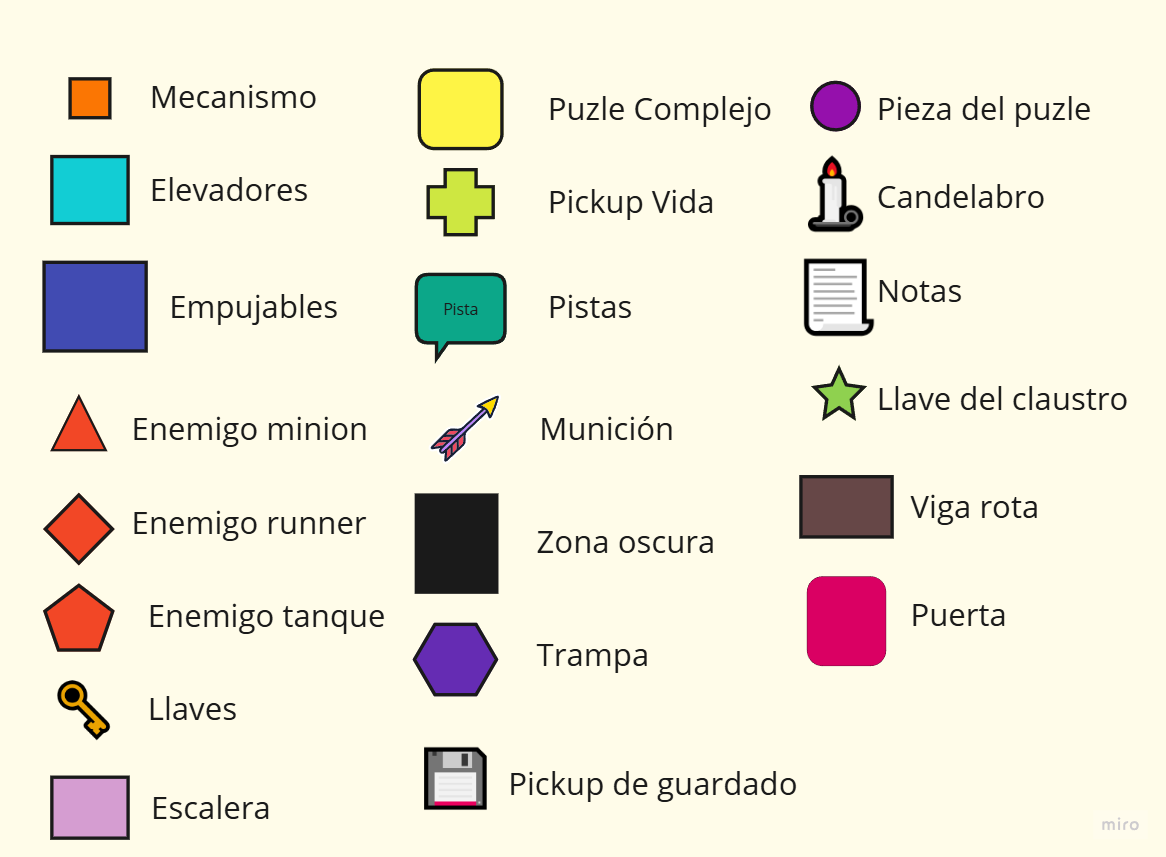
Final Level Layout
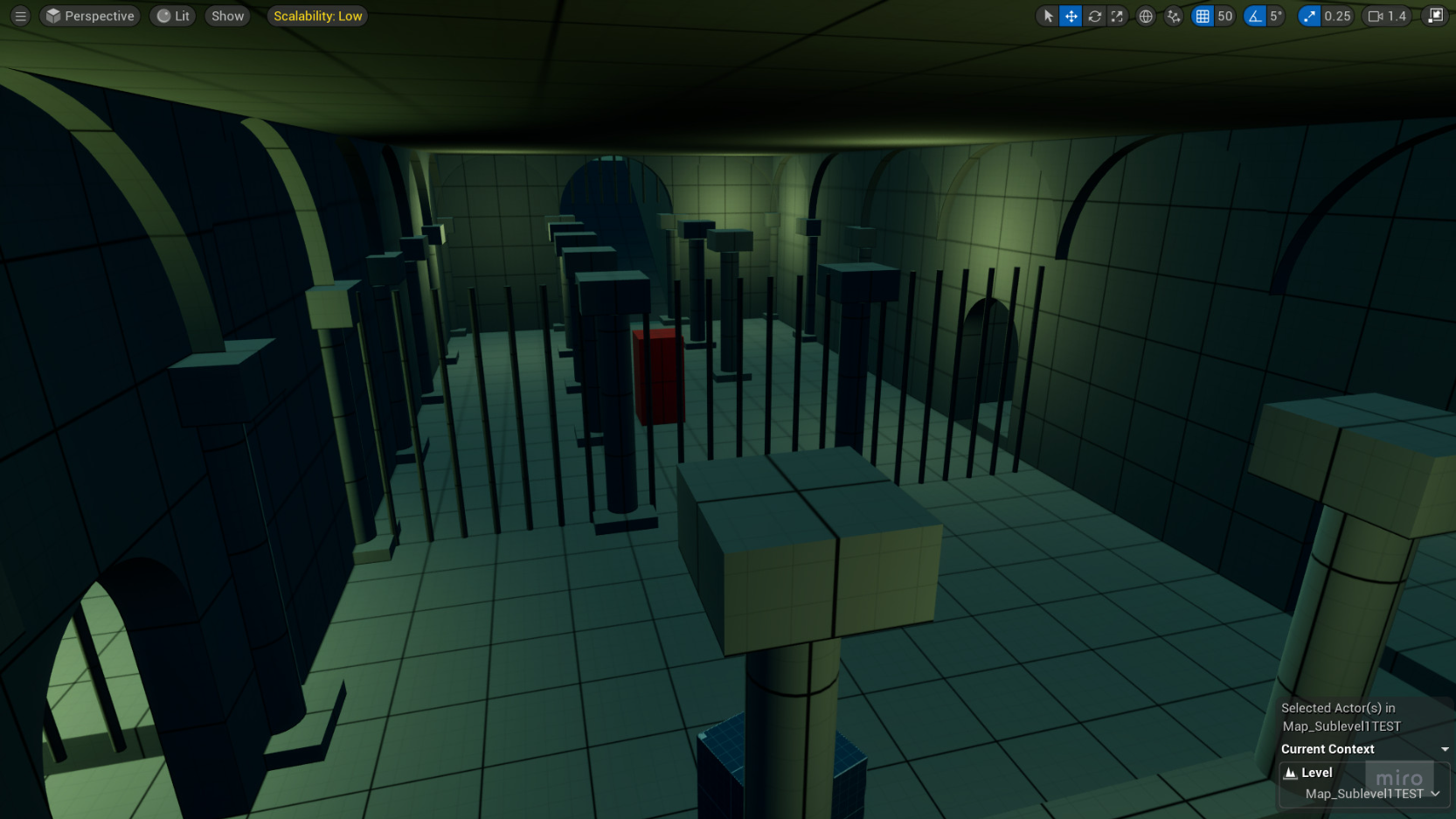
Blocking/GrayBoxing
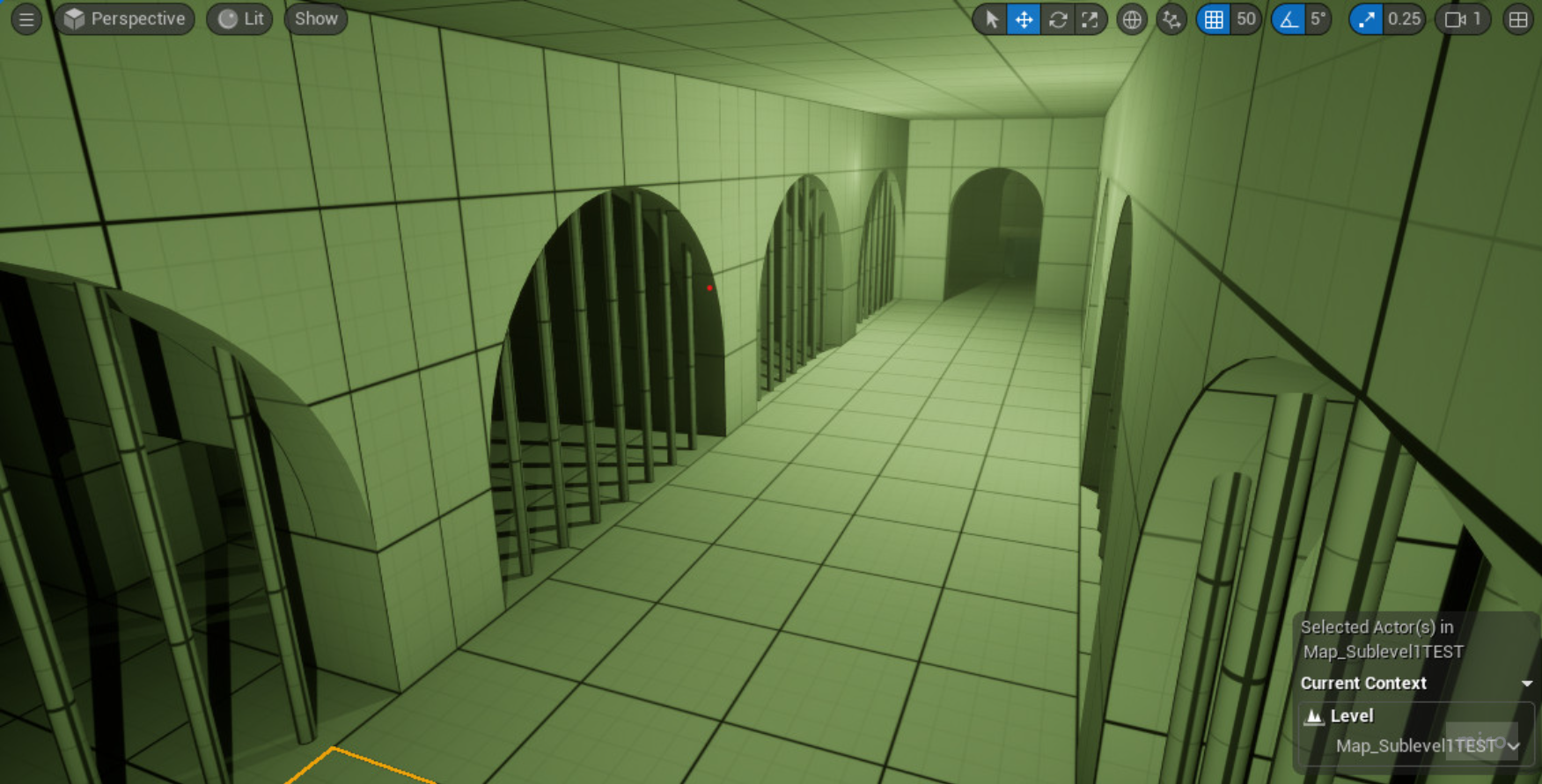
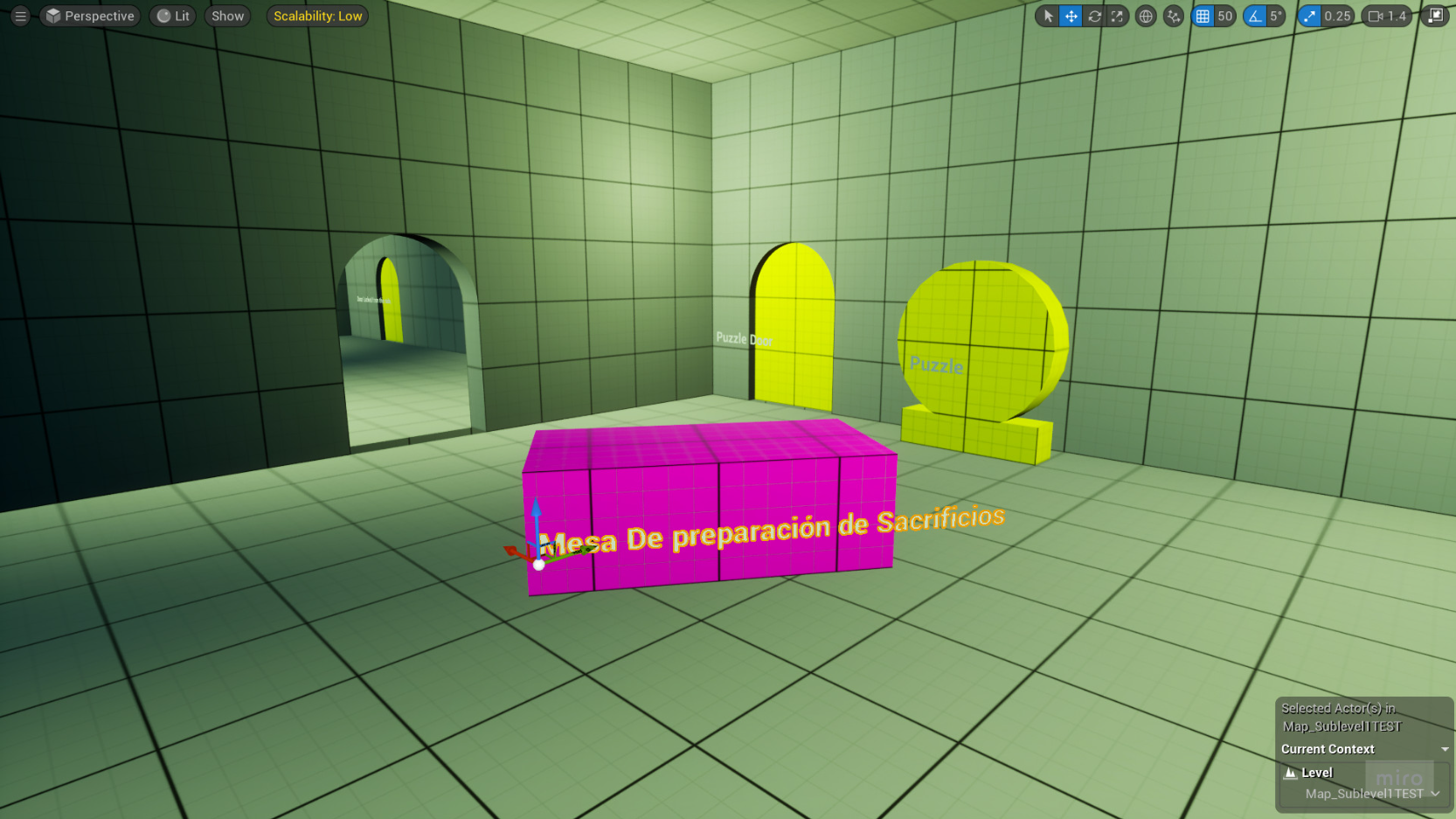
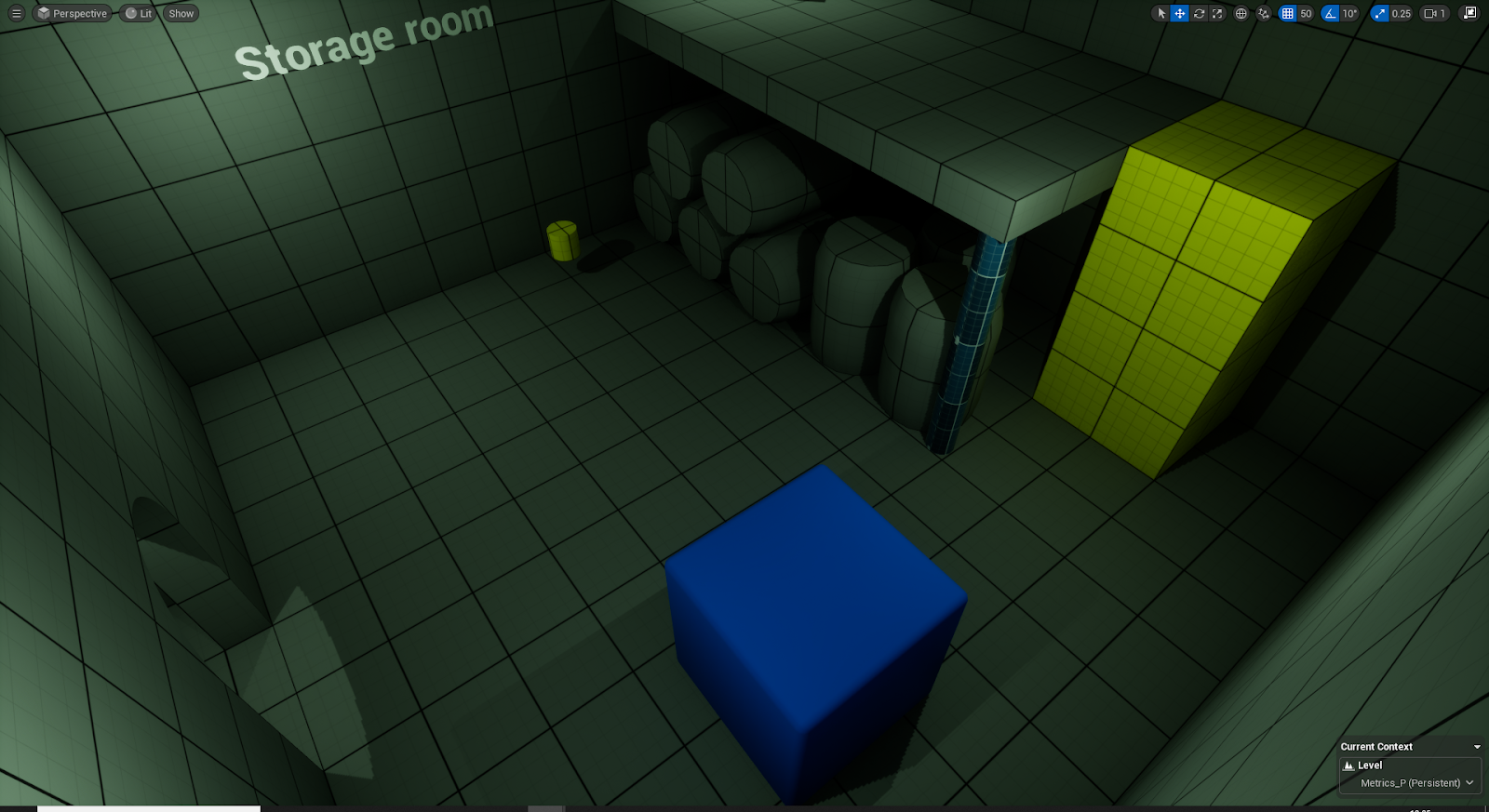
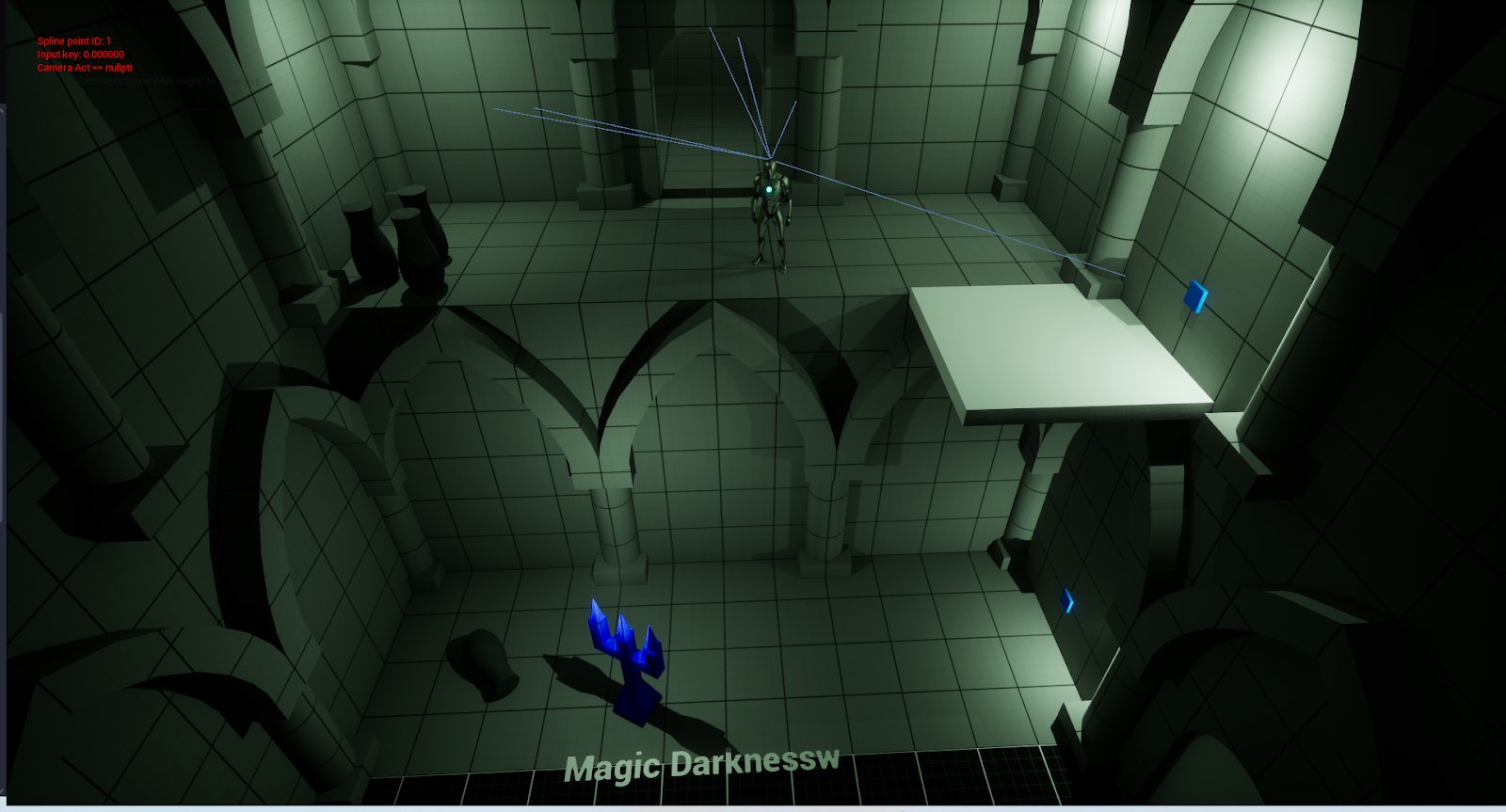
Scripting
I was also responsible of the implementation of the gameplay of the level, using the tools the programmers provided. However I also scripted some events to either bring flavor or important elements of the Gameplay.
For example the design of the Dungeon Puzzle was scripted by me and I go over the process of that in this article.
UI Design
Main Menu, Settings and Hud
I helped implement the art of the UI, including the animated pop-ups and selection.
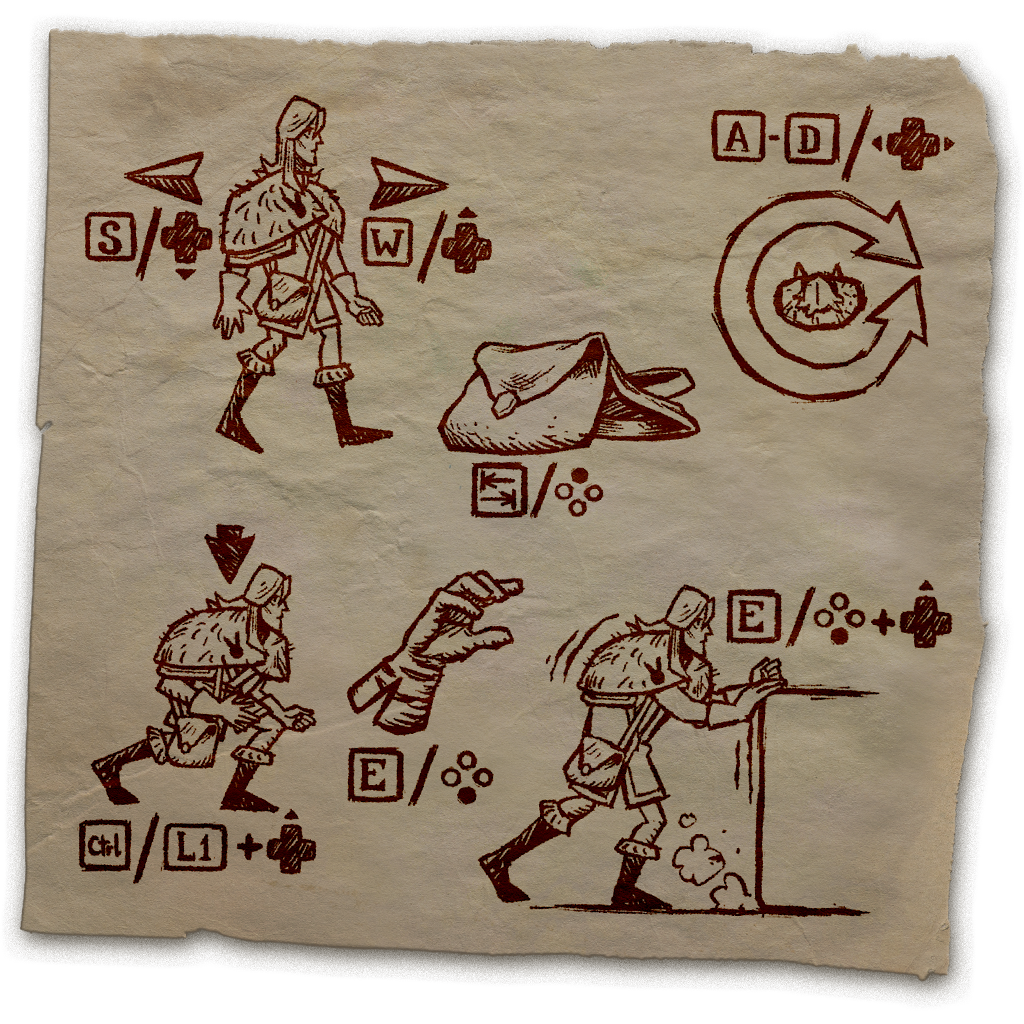
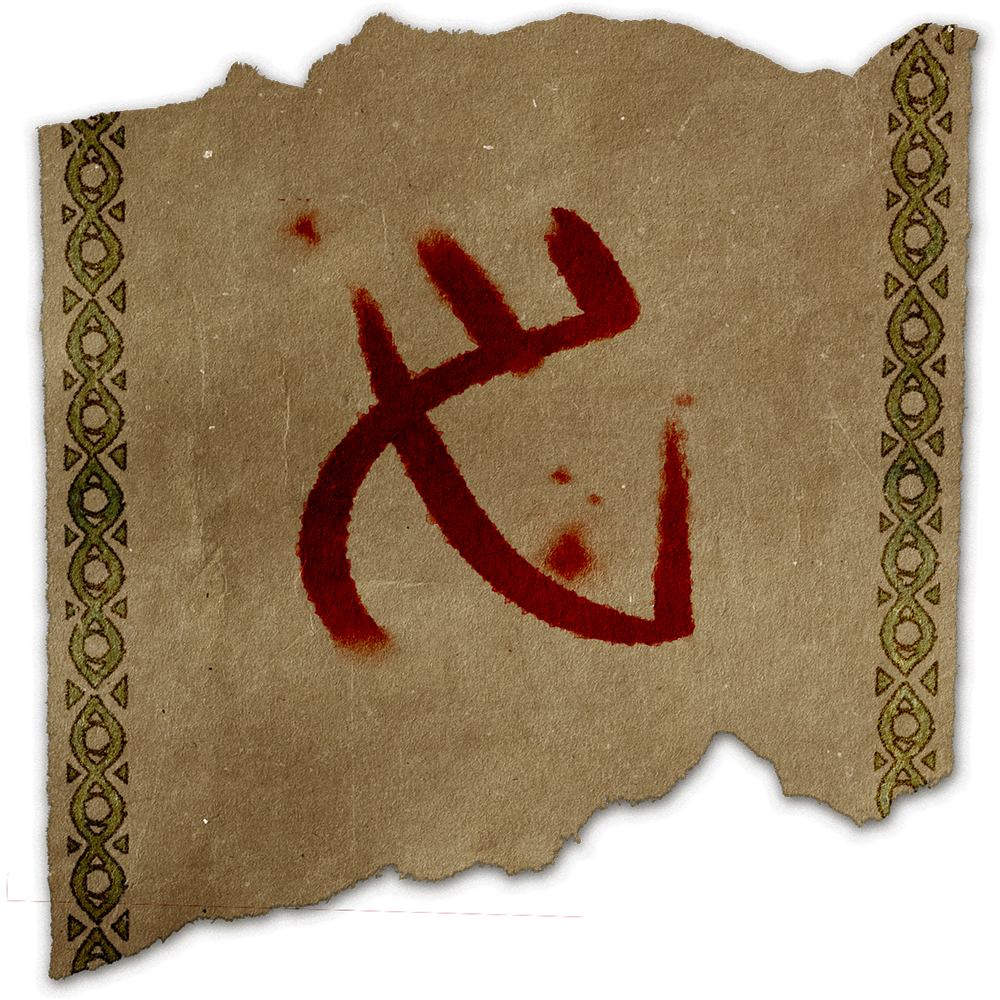
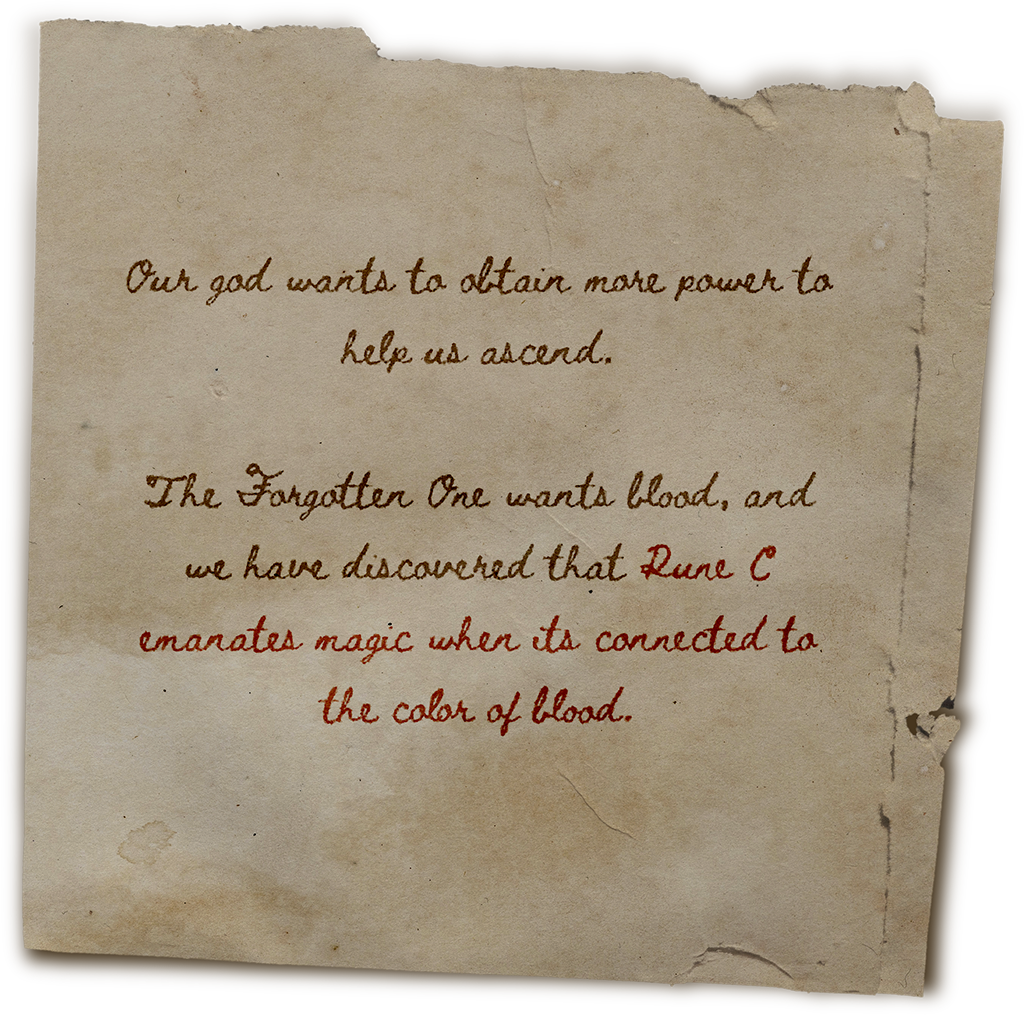
Notes Pipeline
Notes are very important and versatile in Inside the Crow's Nest and were used for tutorials, puzzles and storytelling.
I worked together with the Art Producer to create a Photoshop macro and tool that would allow designers to write notes and clues meant to be used in game. This tool creates an ink bleed effect on paper and can also highlight elements with color by using masks.
Collaboration with Berklee
I led the communication of the collaboration with the students from berklee, and communicated the needs of the project and ensured that the audio provided helped with the player immersion.
Together, we defined the bases of the music categorized it into 3 categories:
- Exploration Music: atmospheric and looks to immerse the player without being distracting.
- Combat Music: It introduces rhythm to create tension and put the player in a fight or flight state.
- Safe Music: It's melodic and its purpose is to lower the tension of the player, it was associated with the Saving Statue and Main Menu.
In total there were 7 pieces of music composed: each area of the game had a specific exploration and combat track, and the safe music.